Stories from the Badger – Two Medicine: Sacred Headwaters Proposed for Protection
"This landscape has shaped my family for generations, and continues to form my land ethic, inspire the work I do, and mold the person I am."
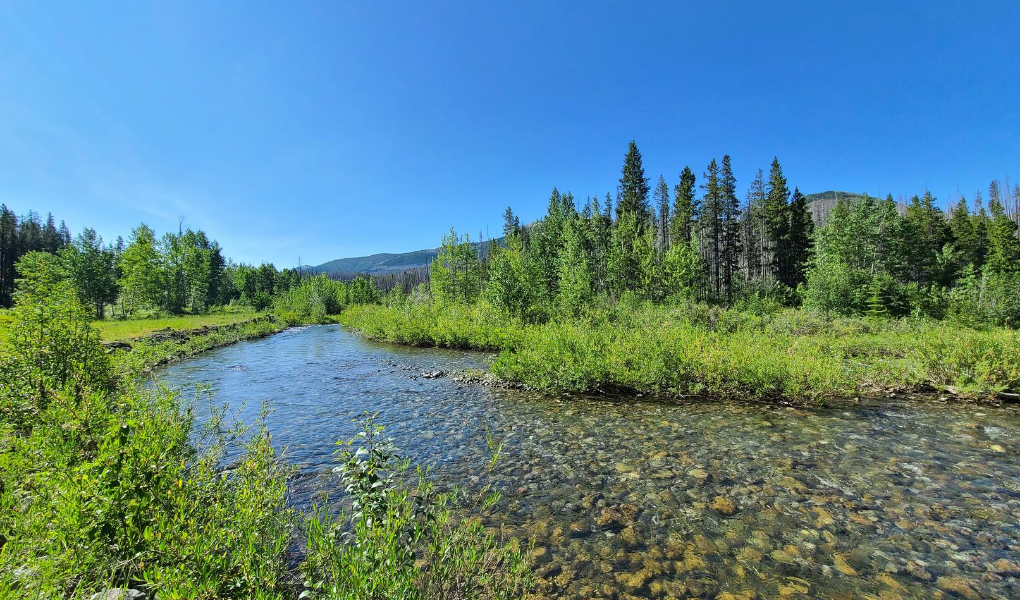
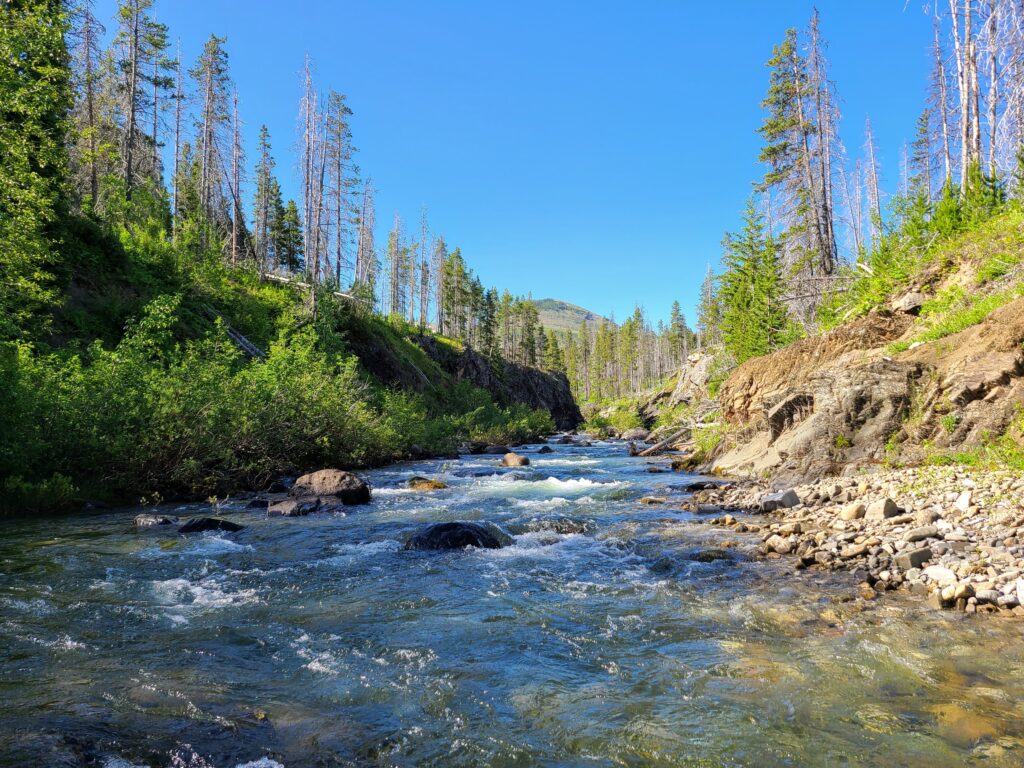
Fresh grizzly tracks wandered onto the trail less than a mile from Marias Pass. They wove in and out of the deep, muddy tread, following a wide cut through thick lodgepole pine, all the way down to the South Fork of the Two Medicine River. My pup, Naki, and I crossed through the current as the first tendrils of rosy-gold light touched the ridgeline above and set up camp while the water turned orange under a midsummer sunset. I sat down on the bank and took a deep breath, closing my eyes as I let it out. The world’s been growing louder lately, and it felt good to let the sounds of the river take over for a while.
I grew up hearing about the Badger – Two Medicine from both sides of my family. As a descendent of the Pikuni People (Blackfeet) on my mother’s side, I learned to respect these ridgelines and river valleys as sacred land; a sanctum of ceremony and stories that have shaped our People for thousands of years.
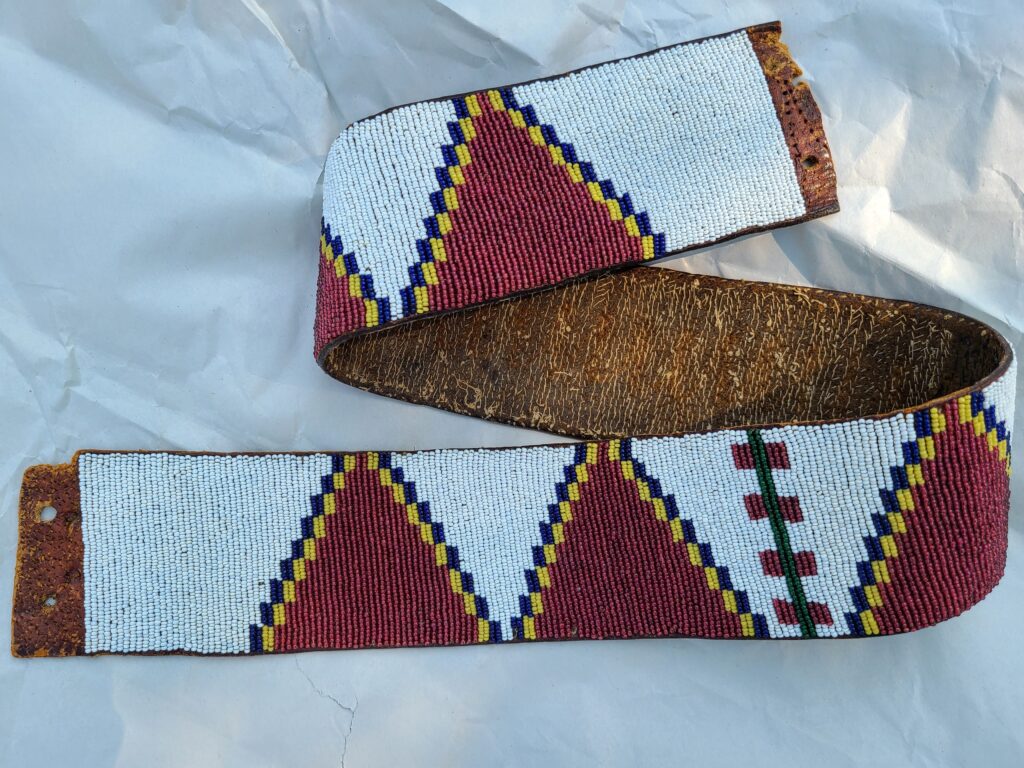
Some of those stories remain, painted onto wind-worn lodges and woven into the intricately beaded belts and dresses of our People. Many of them have been lost throughout the decades, but I’m told their words are still here, spoken by the wind and scattered like seeds across the landscape.
When I was a kid, my sister and I loved to sift through piles of freshly dug dirt near the gopher holes in former Pikuni campsites, searching for the same colorful seed beads our great, great grandmothers used to weave colorful pieces of our family story onto bison leather. Finding them felt like finding the words – the seeds – of those old stories lost to time and change.
My father’s family history tells another story of this area. His great grandfather was one of the first miners to stake a claim near the town of Alton, which now rests at the bottom of Sherburne Reservoir. Though he never had much luck mining, he and his wife did raise 18 children including my great grandpa, Cyril, on the edge of what’s now Glacier National Park.
Cy and his siblings grew up poor and most without more than an 8th grade education, but Cy’s aptitude for tinkering with and fixing things eventually landed him a job as the Chief Engineer for the Glacier Park Hotel Company. He and my great grandma raised my grandpa and his sister in East Glacier where they learned to fish along the Two Medicine River and developed a deep love for the wild country out their back door; a love that eventually led my grandpa to a 40-year career with the Forest Service.
Those years took my grandparents and their five children from Montana, to Alaska, and back again. Still, after so much time and with so much wild country under their boots, my grandparent’s favorite stories to share are those that were born along the forks of the Two Medicine River and in that special country where the mountains meet the prairie. Each summer, with the exception of this year, they gather our family in East Glacier to celebrate one another and the wild places that have shaped us for so long. Even through these uncertain times, unable to gather in those places, this land offers a familiar and comforting embrace.
The air was cool as Naki and I set off the next morning, following the trail as it dipped and rose towards the headwaters of the South Fork of the Two Medicine River and the heart of the Badger – Two Medicine. Signs for High Water Trail No. 101.1 pointed off into hillsides thick with young vegetation and fire-scarred logs that lay like pick-up sticks across the faint remnants of an old contour trail.
I wondered what the river looked like when my Niitsitapi (Blackfoot Confederacy) ancestors first felt the power of this place, and how its channels had changed by the time my European ancestors hung trail signs here. Somewhere deep in my heart a fire burned with the hope that future generations of my family might be able to trace their roots back to the same wild waters and tell their own stories of this place.
I thought about a dearly missed friend and author who once said, “Listen hard, lest I miss the message when the mountains speak.” As the world grows louder, it seems harder and harder to hear that message. Too often are the whispers of the mountains and ramblings of the rivers drowned out by tales of conquest and accounts of development in the name of progress, all so that we might move a little faster through the landscapes we no longer know in the same ways. But, in the Badger – Two Medicine, the message of the mountains and the voices of the people who call it home have risen up.
After a decades-long fight to protect the Badger – Two Medicine from oil and gas development, these rivers and ridgelines are closer than ever to being protected in perpetuity. A bill recently introduced by Senator Jon Tester (D-MT) seeks to designate over 127,000 acres of sacred cultural land, vital wildlife habitat, and pristine, free-flowing rivers under the Badger – Two Medicine Protection Act.
The Badger – Two Medicine Area is an incredible, unprotected swath of wild country, encompassing the headwaters of Badger Creek and the Two Medicine river south of Glacier National Park. It is considered to be the sacred backbone of Blackfeet culture, knowledge and identity, as well as home to grizzly bears, elk, wolverines, and native fish. After years of work, the Blackfeet Nation and its partners created the proposed Cultural Heritage Area to protect the cultural and environmental values of the Badger – Two Medicine. If enacted, this legislation would conserve the largest remaining, unprotected public lands in the Crown of the Continent ecosystem, while simultaneously honoring the Blackfeet Nation’s deep connections to this sacred area, and vital role in the area’s long-term management. Badger Creek, the South Fork of the two Medicine River, and their tributaries are among the many free-flowing rivers protected under this legislation from the lingering threats of oil and gas leasing, dams, and other harmful development.
This landscape has shaped my family for generations, and continues to form my land ethic, inspire the work I do, and mold the person I am. Mine is but one of the countless stories rooted in these hillsides and there are so many more to be told, if we listen hard.
Naki and I paused by the river for a few minutes, staring into the clear, cold current. There’s a clarity there, in the rhythmic wildness of rushing water; a steadiness amidst the rumble that never fails to calm my racing mind and bring me home.
To learn what you can do to help protect the Badger – Two Medicine, contact jstevenson@americanrivers.org.